
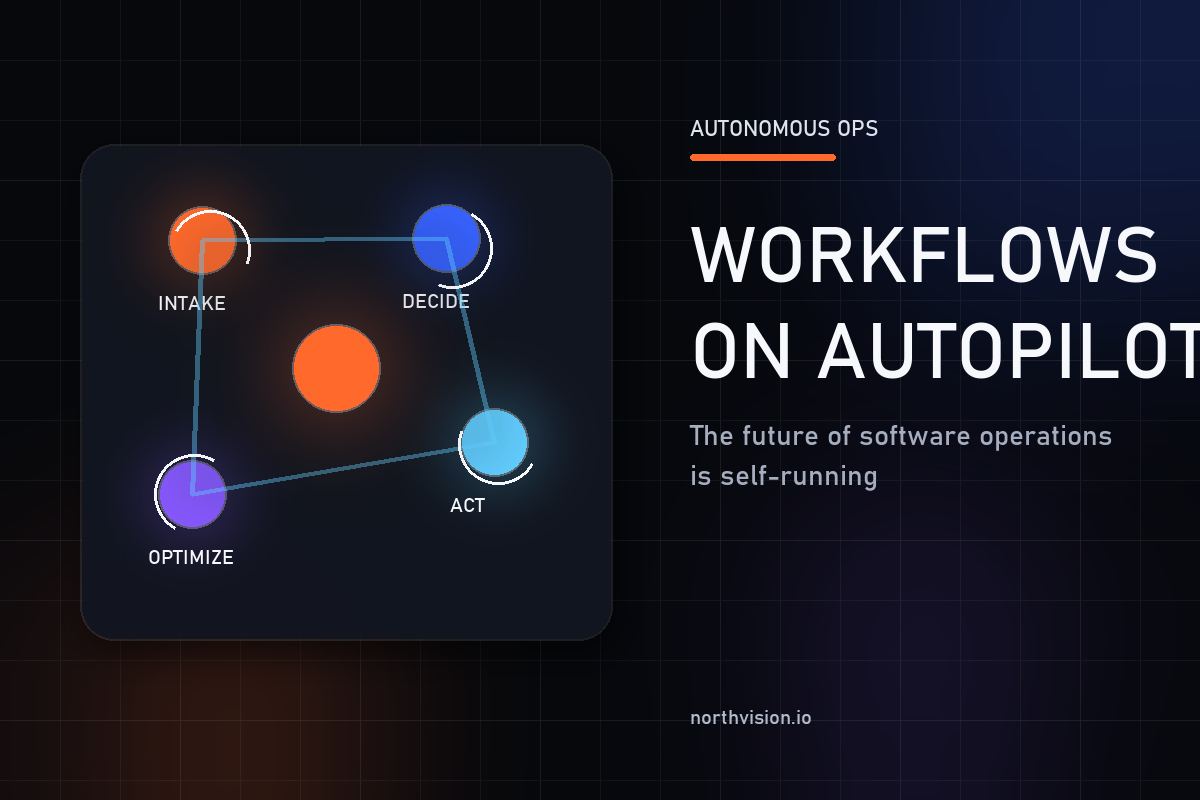
The next step beyond automation is autonomy. Instead of following rigid rules alone, autonomous workflows use AI to interpret inputs, choose actions, and keep work moving through systems with more flexibility and context. That makes them especially powerful for modern software operations, where tasks often cross multiple tools, teams, and data sources.
What makes a workflow autonomous instead of simply automated
A normal automation executes fixed steps. An autonomous workflow can evaluate changing conditions, generate structured outputs, and decide which next action makes sense within a defined boundary. This does not remove control. It improves execution while still respecting business rules and oversight.
- Monitor changing inputs from forms, APIs, messages, and internal tools.
- Interpret context and generate the right next step without manual routing.
- Coordinate actions across multiple systems instead of one isolated task.
- Continuously improve how work is handled through better data and feedback loops.
How NorthVision creates autonomous workflow systems
NorthVision builds autonomous workflows by combining AI models, workflow logic, software integrations, and production-ready interfaces. We identify where autonomy can create the most value, then engineer the system so it can operate consistently across real business environments. The result is not just faster work. It is a more intelligent operating layer for the company.
If your business wants software operations that can execute with less manual coordination and more intelligence, NorthVision can design the right autonomous workflow architecture. Learn more through our AI Strategy & Consulting service.